Academic Project · Art: Luigi Spampinato
Into the Soundscape
Rhythm-Action Roguelike for PC
- My Roles
- Lead Designer, Composer, Game Designer, Economy Designer
- Genre
- Rhythm-action roguelike
- Platform
- PC
- Art
- Luigi Spampinato
- Tools
- Unreal Engine, MetaSounds
Overview
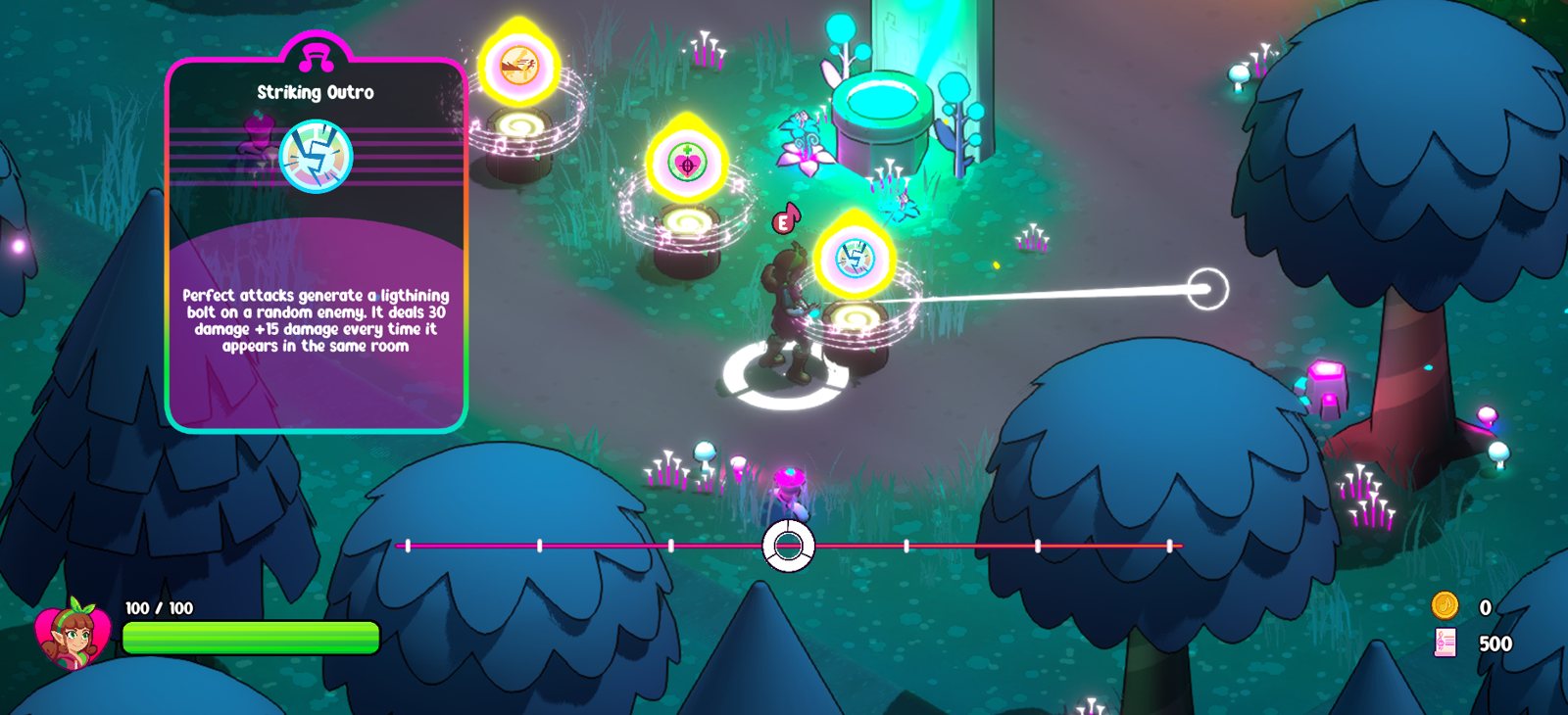
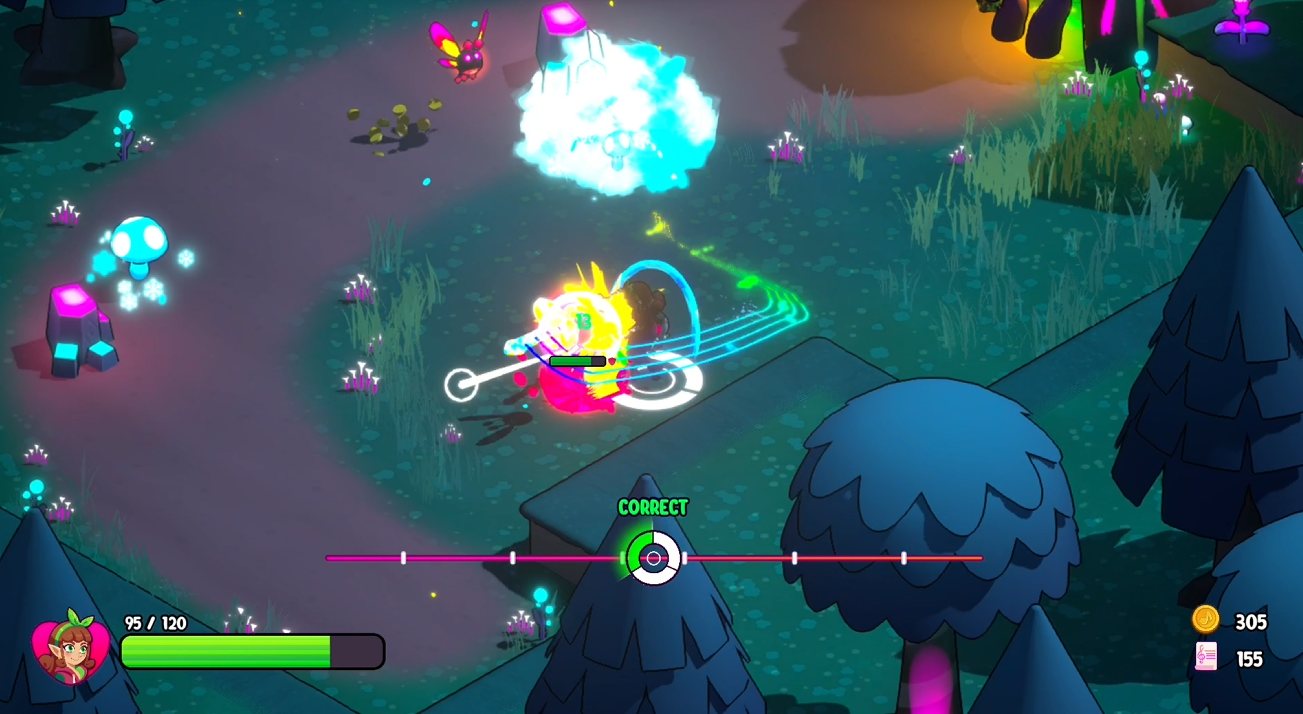
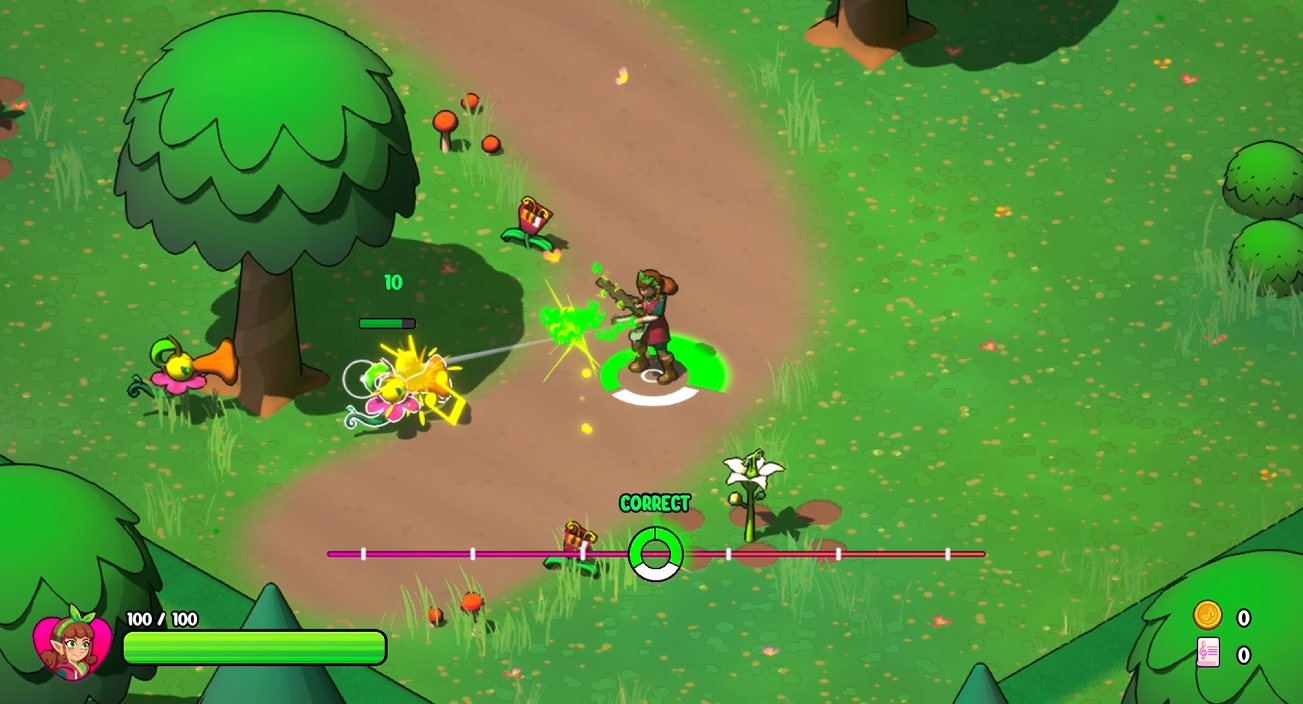
Into the Soundscape is a roguelike with rhythmic combat, where enemies act in time with the soundtrack and players are encouraged to attack on the beat. We aimed to fuse the rhythmic elements of Hi-Fi Rush with the frenetic, responsive combat of Hades. Players advance through an enchanted forest made of two different zones, choosing which room to visit from a deck of cards and picking the best options to personalize their experience.
My Roles
Lead Designer
I had to keep a coherent vision throughout the project, as we aimed for such a delicate balance between two genres. I also oversaw the design documentation, writing most of it and keeping it up to date.
Composer
It was fundamental that someone inside the team wrote the music, since we needed complete control over its BPM and its emphasis on rhythm. I wrote the music in layers that activate depending on gameplay events. For the final boss, I wrote the music in tandem with the design of the attacks to create an immersive experience.
Game Designer
I went wherever the project needed me most from moment to moment. I designed and oversaw the combat system, especially its rhythmic aspects, designed most of the abilities and permanent upgrades as well as some of the enemies, and created the final boss fight along with its level.
Economy Designer
I balanced the core gameplay, the progression through the world, the strength of the enemies and the power-ups. This required tuning fractions of a second, as well as creating formulas and very big Excel sheets to manage all the random aspects of a roguelike.
Designing a Rhythm-like
We wanted to marry the fast-paced, responsive combat of Hades with the rhythm-action gameplay of Hi-Fi Rush. It was a hard challenge that required careful balancing and consideration. We made the game responsive by having every action start immediately after the player's input, rewarding attacks on the beat with extra damage and range. Enemies, instead, are forced to attack on the beat: this didn't affect responsiveness and encouraged players to dash and act on the beat.
Our desired feel meant giving up heavy attacks, which would have created too long a delay between input and action. We compensated for this lack of variety by introducing a ranged attack that can be mixed into combos with the melee attack.
Musical Boss Fight
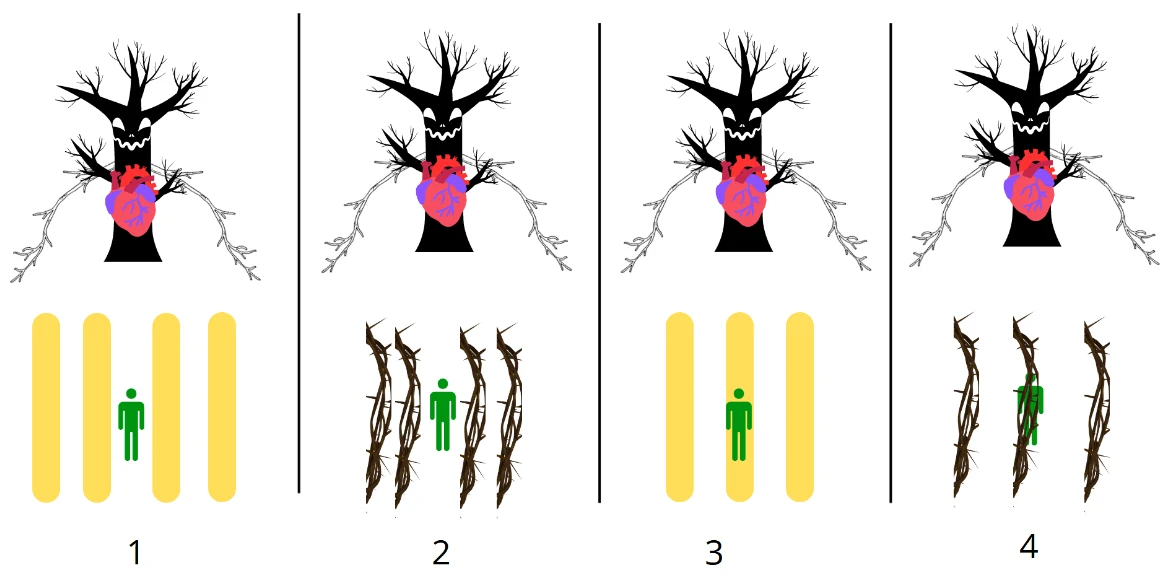
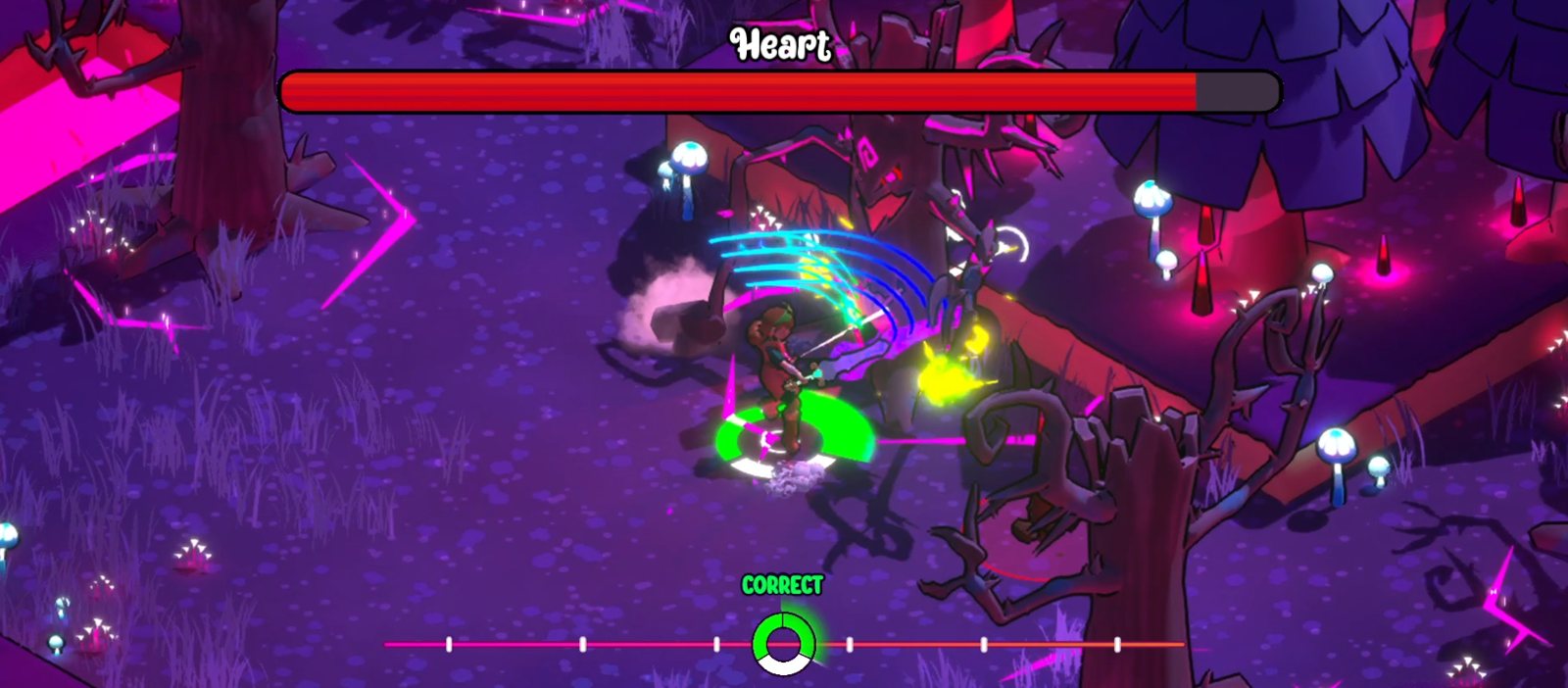
For the final boss I wanted to create a truly immersive experience, with music and gameplay going hand in hand for a spectacular climax. I wrote six different tracks, each tied to a different attack. Each track has cue points that MetaSounds reads to execute the attack, so by learning the melody, players can predict when to dodge.
The melodies flow seamlessly into one another, so the game can pick two different random melodies each time. There is also a rest melody without attacks, at the end of which the boss possesses another tree. In the second phase, every melody speeds up by 20 BPM and a moving damage area appears, making everything even more fast-paced and challenging.
Lessons Learned: Combat
Combat design is a notoriously hard area to tackle, and it's where I feel I learned the most. Overall I'm very satisfied with how the combat turned out, especially considering our level of expertise at the time. That said, there are some things I would do differently if I started again.
First of all, I realized how important juiciness is in a combat system. I was used to iterating back and forth between design and programming and only then, once everything was set, adding VFX, animations and the other aesthetic features. On this project I realized we needed to involve 3D artists and tech artists much sooner, to understand whether the game could deliver the desired feel.
I wasn't really satisfied with the ranged attacks, which felt too disconnected from the melee ones and didn't allow the mix-and-match feel we aimed for. Going back, I would opt for some kind of magical area attack, with a shorter range and longer, weightier animations closer to the melee attacks.
Finally, I think we should have found more ways to tie level design elements to combat, as they don't impact the gameplay enough.
Lessons Learned: Roguelikes
Roguelikes are so different from one another that it's hard to find the right reference for your specific needs. One of the earliest decisions was how to progress through the forest. We wanted to avoid backtracking and free roaming to keep the pacing high: a rhythm game where you walk through empty rooms for ten minutes simply stops being a rhythm game. On the other hand, we wanted to keep the exploration and risk-reward typical of the genre (do I keep exploring to become stronger?). In the end I feel the deck of cards worked well, keeping the action going while giving players a lot of agency. We played further on this by adding a room where the forest deck can be modified.
For the power-ups we took inspiration from the boons in Hades, but designed them to fit the rest of the game, tying their activation to on-time actions. The abilities are fun and play well, but I feel they lack synergy with one another. Making a powerful build and exploring ability combinations is one of the most fun things a roguelike can offer, and I was so disappointed that I started studying the subject and even wrote an article on synergy.